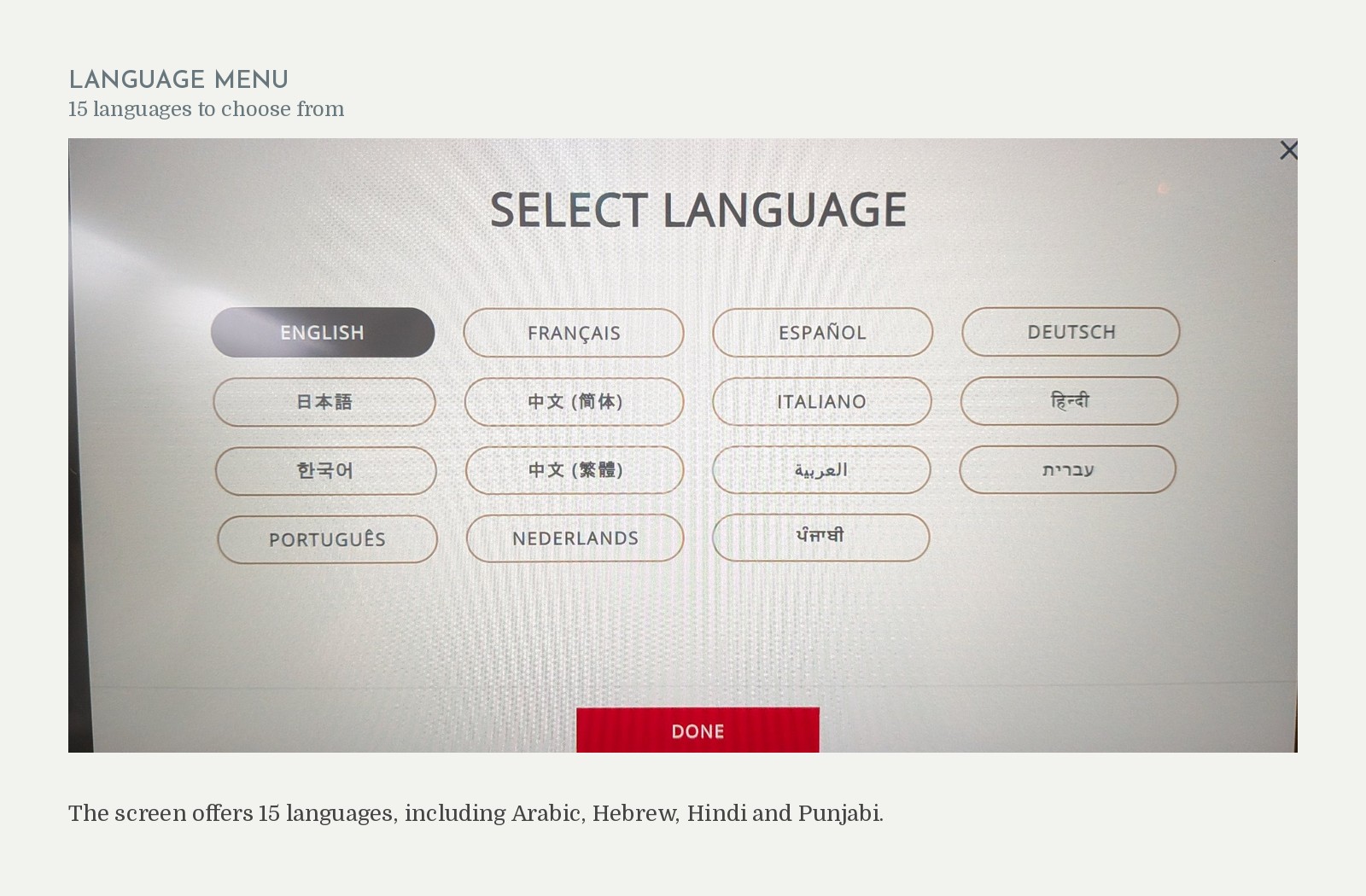
On a recent Air Canada flight from Montreal to the Caribbean, I switched the seatback screen to Arabic to see how it was handled. The screen offers 15 languages, including English, French, Arabic, Hebrew, Hindi, Punjabi, Korean, Japanese and Simplified/Traditional Chinese. As a Canadian I really appreciate that, and I know a lot of work goes into translating and building an interface in that many languages. The Arabic version has two problems, though, and both should have been caught before it went on the planes.
Montreal is spelled backwards
The flight bar at the bottom of the screen shows where you left from and where you’re going. In Arabic, Montreal is مونتريال, but the screen showed ﻞ ﺎ ﻳ ﺮ ﺘ ﻧ ﻮ ﻣ, which is the same letters in reverse order.
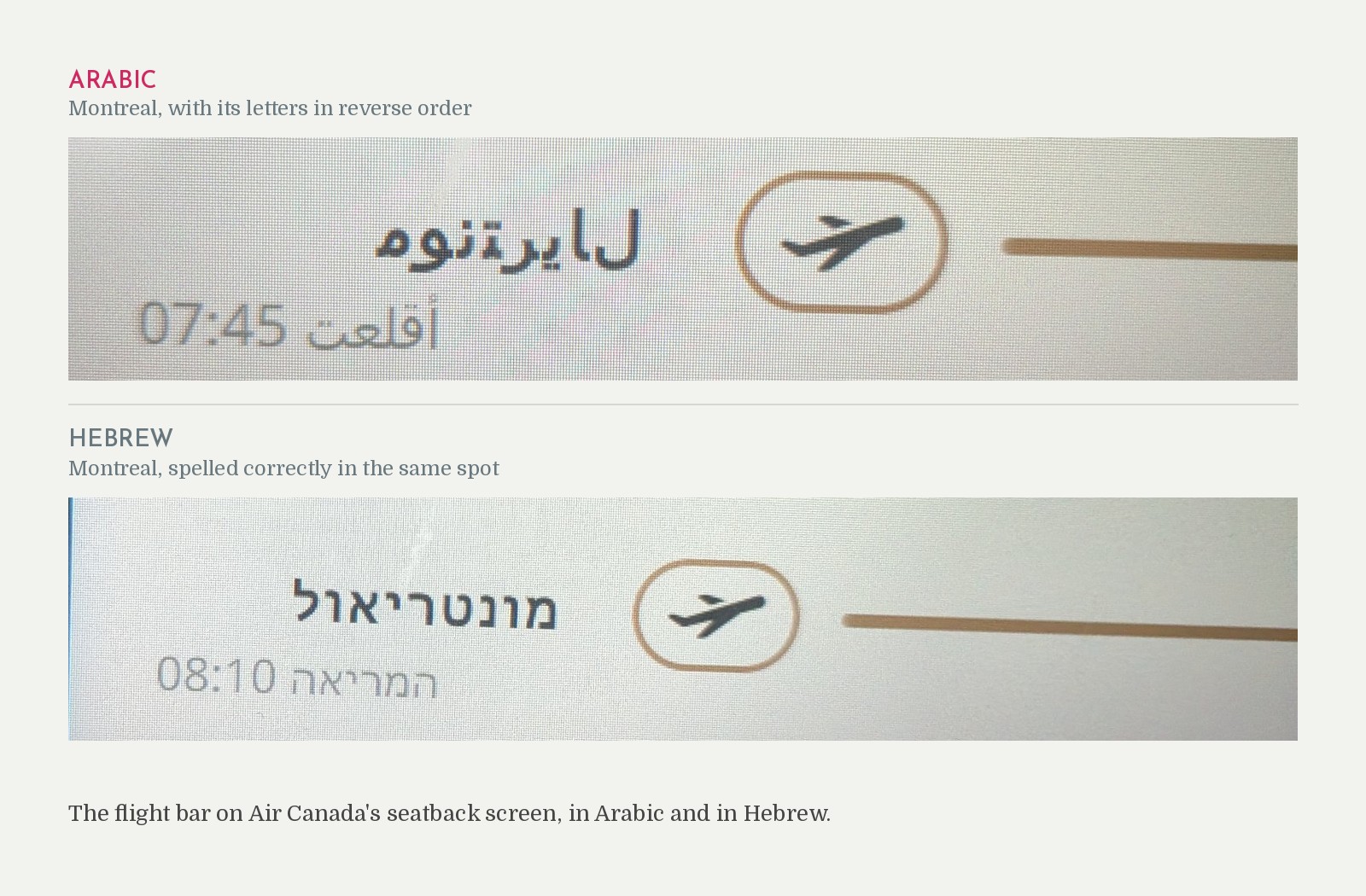
The Hebrew version of the screen is a useful comparison, because Hebrew also reads right-to-left. It showed מונטריאול spelled correctly in the same spot, so the system can display right-to-left text properly. That points to the Arabic name itself being stored in reverse. This often happens when text gets reversed by hand to make it “read right-to-left” for software that can’t handle it, and then ends up in a system that reverses it again. I can’t see the system’s files, so I can’t say for sure where it happened, but the result on screen is clear.
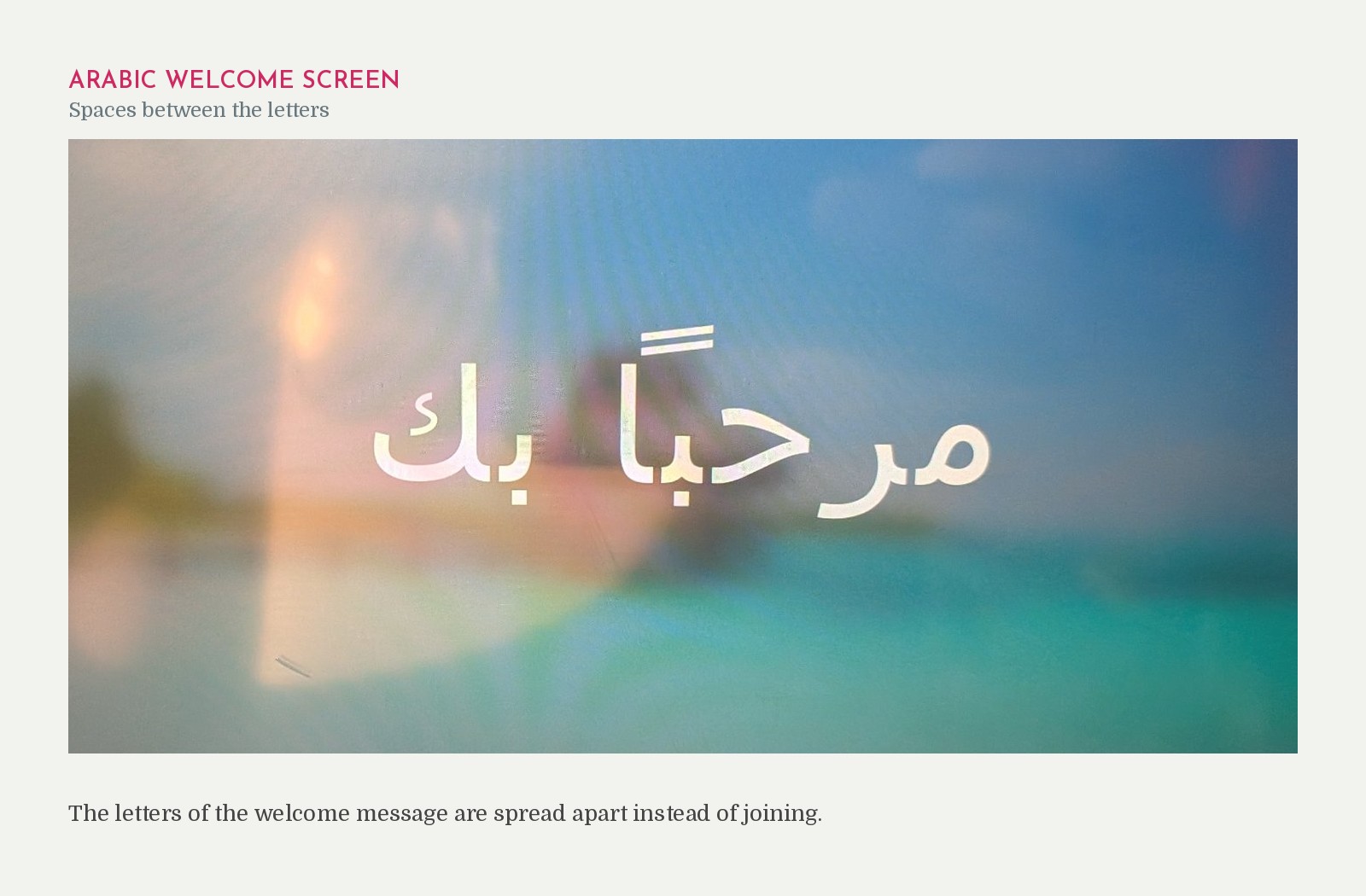
The letters are spaced apart
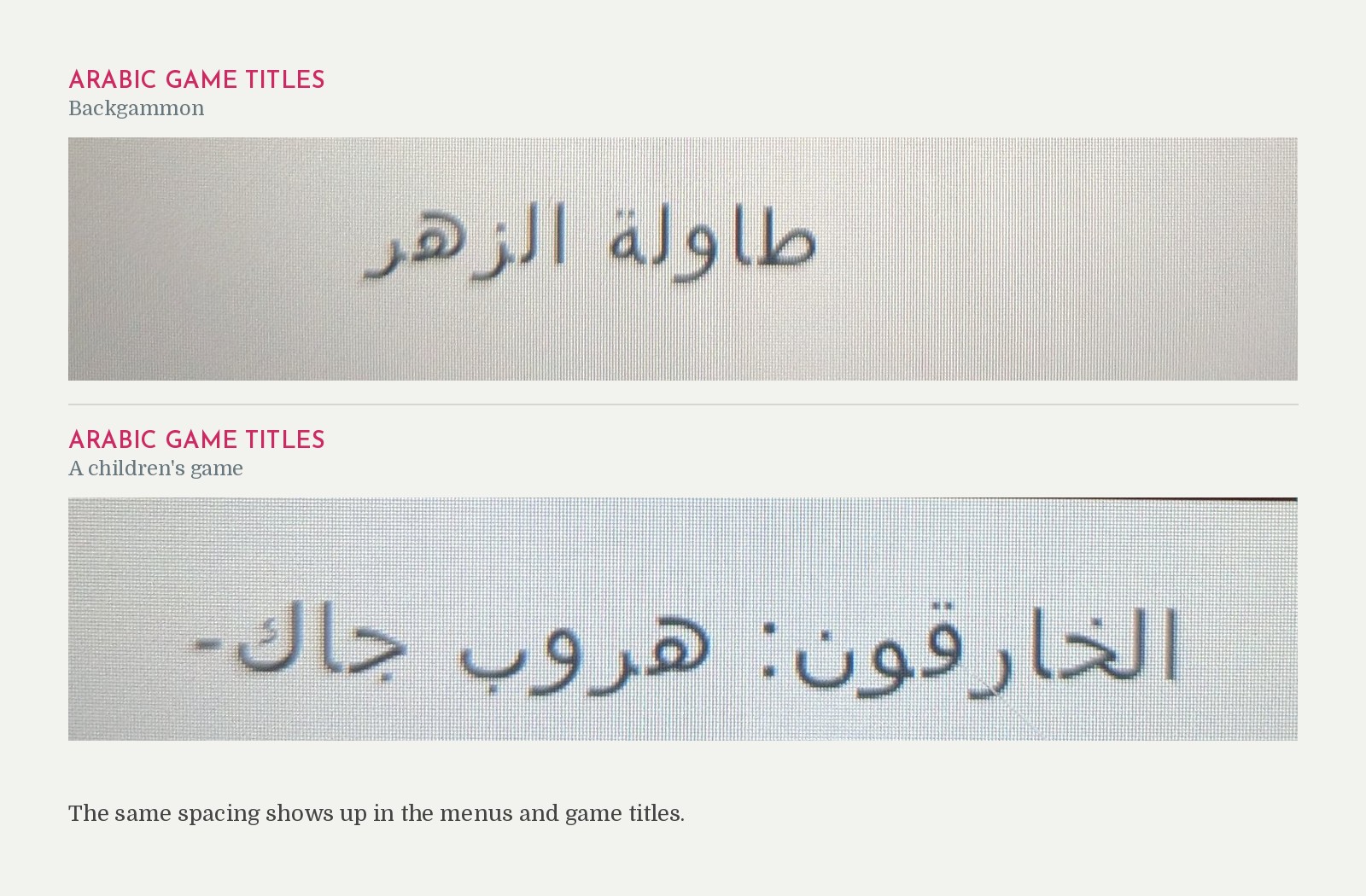
All through the Arabic interface, there are spaces between the letters, on the welcome screen, in the menus and in the game titles. Arabic is a connected script, and most letters join to the ones next to them and change shape depending on where they sit in the word. Adding space between them pulls the words apart. It looks like letter spacing was applied to the text, which is a common design choice in English and barely noticeable there, but it doesn’t work for Arabic.
Why it matters
A while ago I wrote about a smart lock manual that shipped with broken Arabic. That lock was made by a company in China, and it still shouldn’t have shipped that way, but I’d expect more from Canada’s national airline. Arabic was the fourth most spoken non-official language in Canada in the 2021 census, with about 838,000 speakers, so a lot of Air Canada passengers could be looking at these screens.
Neither problem is hard to fix. They’re the kind of thing that gets caught when someone who reads the language checks the actual screens before they ship, and not just the translation files.
Air Canada, you need someone that can do right-to-left… right!