International Multilingual Typesetters Day is October 1st, the day after International Translation Day. I picked that date on purpose, because typesetting is what happens right after the translation is done.
Why the Day Exists
Once a translation is finished, it gets handed to someone who has to turn it into a working document, and that’s where a lot of things can go wrong. Letters don’t join, lines run the wrong way, text grows by thirty percent and pushes the last paragraph off the page, or the font doesn’t have the characters the language needs. None of that is the translator’s fault, and none of it shows up in the text file.
Translators have had their own day for years, and I thought the people who typeset their work should have one too.
Why October 1st
Translation comes first and typesetting comes next, so it made sense for the day to follow right after. The language industry is already talking about translation on September 30th, which makes it a good time to talk about what happens next.
Who It’s For
It’s for multilingual typesetters and desktop publishers, localization DTP specialists, and production staff at translation agencies. It’s also for designers who’ve been handed a file in a script they can’t read, and for the project managers who rely on all of this work without seeing most of it.
How to Mark It
- Post the worst file you ever received, or the best fix you ever made
- Tag the typesetter who’s saved you on a project
- Ask the person who formats your documents what they fix that you never see
- Send me the greeting in your own language and I’ll add it to next year’s card
The Greeting
Every translation on this page has been checked by someone who speaks the language.
English
Happy International Multilingual Typesetters Day
Español
¡Feliz día internacional del Maquetador!
Français
Joyeuse journée internationale des Spécialistes en Éditique
العربية
عيد تصفيف الحروف العالمي سعيد
The formal name of the day in Arabic is اليوم العالمي لتصفيف الحروف متعدد اللغات.
To add yours, email it to me with your name and the language.
Why the Arabic Took the Longest
There’s no settled Arabic word for what we do.
We looked at منضّد, the word for a compositor who set metal type, which is accurate but sounds old-fashioned. We looked at تنضيد, which is correct but technical, and النشر المكتبي, desktop publishing, which describes the software rather than the person.
In the end the answer came from a native speaker rather than a dictionary: تصفيف الحروف, which means arranging the letters. It shares a root with the word for styling hair, which fits work that’s mostly about care and arrangement.
It took a whole evening to settle on three words for a greeting card. The same kind of conversation happens on every job, for every term, in every language, and almost none of it is visible in the finished document.
Who Started It
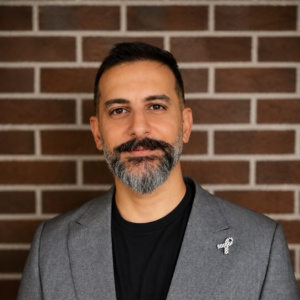
I did, in 2026. I’m Jaber Maycid, a multilingual typesetter in Ottawa. I’ve typeset over 130 languages since 2005, mostly right-to-left and other complex scripts, and I read and write Arabic. If you’d like to see what this work involves, here’s a manual that shipped with every Arabic letter broken.
See you next October 1st.